

Journal of Gastroenterology Research and Practice
Research Article - Open Access, Volume 6
Helicobacter pylori resistance: Analysis of molecular testing in Formalin-Fixed, Paraffin-Embedded (FFPE) biopsy specimens of 968 patients
Torsten Hansen, MD1*; Mathias Diederichs, MS1; Norbert Arens, PhD1; Martin Balsliemke, MD2; Stefan Burg, MD3; Hauke Heinzow, MD4; Erwin Rambusch, MD5; Helena Philipps, MSc1; Mark Kriegsmann, MD6; Katharina Kriegsmann, MD7; Jörg Kriegsmann, MD, PhD1
1Medical Service Center for Histology, Cytology and Molecular Pathology Trier GmbH, Trier, Germany.
2Department of Internal Medicine II, Verbundkrankenhaus Wittlich, Wittlich, Germany.
3Department of Internal Medicine, Kreiskrankenhaus Saarburg, Saarburg, Germany.
4Department of Internal Medicine II, Krankenhaus der Barmherzigen Brüder, Trier, Germany.
5Department of Internal Medicine 1, Klinikum Mutterhaus der Borromäerinnen, Trier, Germany.
6Center for Histology, Cytology and Molecular Pathology, Wiesbaden, Germany.
7Laboratory Department Rhein-Main MVZ GbR, Frankfurt am Main, Germany.
*Corresponding Author : Torsten Hansen
Medical Service Center for Histology, Cytology
and Molecular Pathology Trier GmbH, Trier,
Germany.
Email: Torsten.Hansen@patho-trier.de
Received : Jan 20, 2026
Accepted : Feb 18, 2026
Published : Feb 25, 2026
Archived : www.jjgastro.com
Copyright : © Hansen T (2026).
Abstract
Objective: Antibiotic resistance in Helicobacter pylori has reached alarming levels worldwide. Molecular testing for resistance-associated mutations in FFPE tissue specimens—particularly those linked to clarithromycin and fluoroquinolone resistance—has been shown to perform comparably to phenotypic susceptibility testing. However, clinicopathological analyses based on this approach have not been described in detail for large cohorts.
Methods: We analyzed FFPE biopsy specimens of 968 patients with H. pylori gastritis (male: 335; female: 633; mean age: 51 years) using a strip assay based molecular test to detect H. pylori and mutations conferring resistance to clarithromycin (R-CLA), Fluoroquinolones (R-FLU), and dual resistance (R-CLA×FLU). Associations with sex and age were assessed by binary logistic regression.
Results: Overall, resistance-associated mutations were detected in 65.1% of patients (630/968). Clarithromycin Resistance (R-CLA) was most common (63.8%), followed by dual resistance (R-CLA×FLU; 24.0%) and Fluoroquinolone Resistance (R-FLU; 12.2%). Female sex (p=0.037) and older age (>70 years; p=0.005) were significantly associated with R-CLA. No relevant sex- or age related differences were observed for R-FLU. For R-CLA×FLU, female sex (p=0.009) and older age (>70 years; p=0.001) were significant risk factors. In 338/968 patients (34.9%), no resistance-conferring mutations were detected; this susceptible group was significantly associated with male sex (p=0.014) and younger age (< 40 years; p=0.019).
Conclusion: Molecular testing in FFPE specimens yields resistance patterns for R-CLA and R-FLU that are largely consistent with previously published epidemiological data derived mainly from culture-based or native specimens. Importantly, we provide an evaluation of a comparatively large dual-resistance cohort and identify female sex and advanced age as significant risk factors for R-CLA×FLU. Molecular analysis in FFPE tissue is a feasible approach that may support improved antibiotic stewardship in H. pylori eradication.
Keywords: H. pylori; Resistance; Clarithromycin; Fluoroquinolones; Molecular pathology; FFPE specimens.
Citation: Hansen T, Diederichs M, Arens N, Balsliemke M, Burg S, et al. Helicobacter pylori resistance: Analysis of molecular testing in Formalin-Fixed, Paraffin-Embedded (FFPE) biopsy specimens of 968 patients. J Gastroenterol Res Pract. 2026; 6(2): 1249.
Introduction
H. pylori is a ubiquitous Gram-negative bacterium infecting approximately one-third to one-half of the global population. Although infection is often asymptomatic, it is also associated with chronic gastritis, peptic ulcer disease, non-ulcer dyspep sia, adenocarcinoma, and Mucosa-Associated Lymphoid Tissue (MALT) lymphoma [1-3]. Since 2012, H. pylori is classified as a Group 1 carcinogen according to the International Agency for Research on Cancer (IARC) classification, and its eradication re duces the incidence of gastric cancer [4]. Current empiric treat ment regimens for H. pylori eradication combine two or three antibiotics and one acid-suppressive drug for 14 days, aiming for eradication rates >80% [3,5].
Despite constant efforts in improving treatment strategies, H. pylori has increasingly acquired antibiotic resistance through mutations [6-10]. Antibiotic resistance is a major driver of eradication failure; therefore, multiple studies have shown that susceptibility-guided therapy is more effective than empiric treatment [11-13]. Current guidelines recommend resistance testing prior to prescribing antibiotic therapy even before first line treatment with regard to optimized antibiotic stewardship. This assessment is especially proposed for clarithromycin and/ or fluoroquinolones [5,14].
The gold standard for antibiotic susceptibility testing is phe notypical analysis, i.e. agar dilution testing, which requires cul ture of the organisms; however, this method is time-consuming and labor-intensive. Consequently, culture-independent meth ods to predict resistance are increasingly important. Resistance mechanisms in H. pylori are well characterized [5,15]. Enzyme immunoassays, Fluorescence in Situ Hybridization (FISH), sev eral PCR-based methods as well as Next-Generation Sequenc ing (NGS) have been used to detect H. pylori and resistance associated mutations in biopsies, gastric fluid, colonies, and stool [9,12,15]. PCR methods targeting mutations can provide high sensitivity and specificity and thus represent alternatives to phenotypic testing [15,16].
Resistance against Clarithromycin (R-CLA) is primarily caused by mutations in the 23S rRNA gene (notably A2146G, A2146C, A2147G). Fluoroquinolone Resistance (R-FLU) is most com monly associated with mutations in the gyrA gene (particularly at codons 87 and 91), allowing PCR or sequencing-based tests to predict resistance with good accuracy [5,15-17]. Accordingly, the Maastricht VI/Florence consensus report recommends mo lecular methods—especially real-time PCR, whole-genome se quencing, and digital PCR—for detecting mutations associated with resistance to clarithromycin, fluoroquinolones, tetracy cline, and rifampicin [5].
Molecular resistance testing has also been applied to gas tric biopsies, including routine FFPE biopsy specimens used for histopathology [9,16-21]. However, clicnical data from large cohorts are difficult to collect and remain limited, particularly for FFPE-based studies [10,20]. Therefore, we retrospectively analyzed our routine diagnostic cohort of 968 FFPE H. pylori positive cases undergoing routine molecular resistance testing, focusing on risk factors (age and sex) for R-CLA, R-FLU, and dual resistance.
Materials and methods
Study population and molecular analysis
We conducted a single-center retrospective study on FFPE gastric biopsy specimens with a histopathological diagnosis of H. pylori gastritis. Cases negative for H. pylori by molecular test ing were excluded.
From January 2014 to December 2023, we received a total of 968 patients (male: n=335, mean age=50.1 years, min. – max.:7 to 83 years; female: n=633; mean age=51.4 years, min. – max.: 5 to 89 years) for molecular testing. DNA was extracted from FFPE tissue blocks using the Maxwell RSC FFPE Plus DNA kit (Promega; Walldorf, Germany). Molecular detection of H. py lori and resistance-associated mutations for clarithromycin and fluoroquinolones was performed using a strip assay (GenoType Helico DR kit, Hain Lifesciences; Nehren, Germany) including DNA amplification and hybridization, as previously reported [16]. The assay detects the major 23S rRNA mutations confer ring clarithromycin resistance (A2146G, A2146C, A2147G) and the clinically relevant gyrA mutations at codons 87 and 91 con ferring fluoroquinolone resistance. Hybridization to Wild-Type (WT) or mutant (MUT) probes yields bands on the strip (Figure 1). Detection of MUT bands was interpreted as resistance to Clarithromycin only (R-CLA) and/or Fluoroquinolones only (R FLU). Cases positive for mutations conferring resistance to both were classified as dual resistance (R-CLA×FLU). Cases showing both wild-type and mutant probe hybridization (WT+MUT) were classified as resistant, reflecting the presence of mixed bacterial populations. Hybridization to WT only was defined as absence of resistance-conferring mutations for both antibiotics (i.e. susceptibility).
The strip includes internal positive/negative controls and a H. pylori identification band.
Statistical analysis and literature review
To identify factors associated with R-CLA, R-FLU, and R-CLA×FLU, binary logistic regression was performed to esti mate Odds Ratios (ORs) with 95% Confidence Intervals (CIs). Variables included sex (male/female) and age groups (≤20, 21 30, 31-40, 41-50, 51-60, 61-70, >70 years). The same regression approach and covariates were used to evaluate factors associ ated with susceptibility (no resistance-conferring mutations de tected). A p-value <0.05 was considered statistically significant. Analyses were performed using Microsoft Excel (version 16.85) and IBM SPSS Statistics (versions 27 and 29).
A literature search was performed in PubMed, restricted to studies published up to 2025 with cohorts >100 patients; no language restrictions were applied.
Ethics
The ethics review committee of the Medical Association of Rhineland-Palatinate approved this study (Ref. 2023-16961). Analyses were conducted in accordance with the Declaration of Helsinki, and all data were analyzed anonymously.
Results
A total of 968 patients with H. pylori PCR positive FFPE samples were included in this study. The mean age was 51.0 yrs (male=50.1 years, min. – max.: 7 to 83 yrs; female=51.4 yrs, min. – max.: 5 to 89 years), 65.4% were female (n=633), and 34.6% were male (N=335). Overall, 65.1% harbored resistance associated mutations (n=630; male: n=200, 31.7%; female: n=430, 68.3%), most of them with R-CLA (n=402; 63.8%), fol lowed by patients with R-CLAxFLU (n=151; 24.0%), and R-FLU (n=77; 12.2%). In 338/968 patients (34.9%; male: n=135, 40.0%; female: n=203, 60.0%), no resistance-conferring mutations were detected.
Logistic regression results are summarized in (Tables 1-4). For R-CLA, female sex (OR 1.38, 95% CI 1.02-1.88; p=0.037) and older age were significant predictors, with the strongest associ ation in patients >70 years (OR 3.04, 95% CI 1.40-6.61; p=0.005). No significant sex- or age-related differences were observed among R-FLU patients. For R-CLA×FLU, both female sex (OR 1.77, 95% CI 1.15-2.71; p=0.009) and older age were significant predictors, with increasing effect sizes across older age groups and the strongest association in those >70 years (OR 12.28, 95% CI 2.63-57.31; p=0.001). The susceptible group was significantly associated with male sex (OR 1.42, 95% CI 1.07-1.87; p=0.014) and younger age (≤20 years: OR 3.65, 95% CI 1.80-7.44; p <0.001; 31-40 years: OR 1.95, 95% CI 1.12-3.39; p=0.019).
By literature search, we found fifteen comparable cohort studies on H. pylori resistance regarding the specific risk factors sex and age. The relevant findings, including our own results, are summarized in (Table 5). In 9/15 reports (60%) female sex was a relevant factor for R-CLA (the study of Shiota et al. [28] was excluded in this setting because only male patients were examined). Increasing age as critical factor was found in 4/16 studies, while each one study from Japan [23] and from Turkey [19] described younger age (<30 yrs) as relevant for carrying R CLA. For the R-FLU group, 3/16 studies evaluated female sex as relevant risk factor, while the majority did not find significant sex differences. Regarding advanced age, 7/16 studies revealed a relevant association for R-FLU. Concerning R-CLAxFLU, there were only a few studies reporting on relatively little numbers of patients (n<50); moreover, a statistical analysis has not been revealed in these cases yet.
Table 1: Binary logistic regression analysis of age and sex associ ated with R-CLA.
| Variable | OR (95 %-KI) | p-value |
|---|---|---|
| REF (≤ 20 yrs, male sex) | ||
| 21-30 yrs | 2.13 (0.92-4.92) | 0.78 |
| 31-40 yrs | 1.77 (0.86-3.63) | 0.120 |
| 41-50 yrs | 2.59 (1.29-5.18) | 0.007 |
| 51-60 yrs | 1.88 (0.94-3.75) | 0.072 |
| 61-70 yrs | 2.10 (1.04-4.21) | 0.038 |
| >70 yrs | 3.04 (1.40-6.61) | 0.005 |
| Female sex | 1.38 (1.02-1.88) | 0.037 |
Hosmer-Lemeshow goodness-of-fit test: p=0.92. REF: Reference Group; yrs: years
Table 2:Binary logistic regression analysis of age and sex associated with R-FLU.
| Variable | OR (95% -KI) | p-value |
|---|---|---|
| REF (≤ 20 yrs, male sex) | ||
| 21-30 yrs | 0.97 (0.20-4,83) | 0.972 |
| 31-40 yrs | 1.87 (0.57-6,12) | 0.303 |
| 41-50 yrs | 1.13 (0.33-3,93) | 0.843 |
| 51-60 yrs | 2.01 (0.64-6,35) | 0.235 |
| 61-70 yrs | 1.71 (0.52-5,58) | 0.375 |
| >70 yrs | 1.81 (0.48-6,90) | 0.384 |
| Female sex | 1.07 (0.64-1,80) | 0.787 |
Hosmer-Lemeshow goodness-of-fit test: p=0.89. REF: Reference group; yrs: years
Table 3: Binary logistic regression analysis of age and sex associ ated with R-CLAxFLU.
| Variable | OR (95 %-KI) | p-value |
|---|---|---|
| REF (≤ 20 yrs, male sex) | ||
| 21-30 yrs | 7.62 (1.52-38.27) | 0.014 |
| 31-40 yrs | 2.47 (0.51-12.09) | 0.265 |
| 41-50 yrs | 7.30 (1.63-32.72) | 0.009 |
| 51-60 yrs | 7.10 (1.60-31.47) | 0.010 |
| 61-70 yrs | 7.32 (1.64-32.76) | 0.009 |
| >70 yrs | 12.28 (2.63-57.31) | 0.001 |
| Female sex | 1.77 (1.15-2.71) | 0.009 |
Hosmer-Lemeshow goodness-of-fit test: p=0.99. REF: Reference group; yrs: years
Table 4: Binary logistic regression analysis of age and sex associated with susceptible patients.
| Variable | OR (95% -KI) | p-value |
|---|---|---|
| REF (>70 yrs, female sex) | ||
| ≤20 yrs | 3.65 (1.80-7.44) | <0.001 |
| 21-30 yrs | 1.50 (0.76-2.97) | 0.244 |
| 31-40 yrs | 1.95 (1.12-3.39) | 0.019 |
| 41-50 yrs | 1.32 (0.77-2.24) | 0.310 |
| 51-60 yrs | 1.52 (0.90-2.55) | 0.114 |
| 61-70 yrs | 1.46 (0.86-2.48) | 0.163 |
| Male sex | 1.42 (1.07-1.87) | 0.014 |
Hosmer-Lemeshow goodness-of-fit test: p=0.975. REF: Reference group; yrs: years
Table 5: Antibiotic-resistant H. pylori according to risk factors sex and age.
| Study (first author and ref.) | Country/countries included | Number of patients | R-CLA | R-FLU | R-CLAxFLU |
|---|---|---|---|---|---|
| Bai et al. [22] | China | 181 | Age: n.r. Sex: n.r. |
Age: n.r. Sex: n.r. |
Age: n.d. Sex: n.d. |
| Blümel et al. [10] | Germany | 1851 | Age: n.r. Sex: F |
Age: >50 yrs Sex: n.r. |
Age: n.d. Sex: n.d. |
| Horie et al. [23] | Japan | 5249 | Age: <30 yrs Sex: F |
Age: n.d. Sex: n.d. |
Age: n.d. Sex: n.d. |
| Ji et al. [24] | China | 29034 | Age: >70 yrs Sex: n.d. |
Age: >50 yrs Sex: n.d. |
Age: n.d. Sex: n.d. |
| Megraud et al. [7] | Europe | 2204 | Age: n.r. Sex: n.d. |
Age: >50 yrs Sex: n.d. |
Age: n.d. Sex: n.d. |
| Megraud et al. [8] | Europe | 1211 | Age: n.r. Sex: n.r. |
Age: n.r. Sex: n.r. |
Age: n.d. Sex: n.d. |
| Miendje Deyi et al. [25] | Belgium | 10670 | Age: >40 yrs Sex: F |
Age: >40 yrs Sex: F |
Age: n.d. Sex: n.d. |
| Mosites et al. [26] | USA (Alaska) | 763 | Age: n.r. Sex: F |
Age: >60 yrs Sex: n.r. |
Age: n.d. Sex: n.d. |
| Sanches et al. [17] | Brazil | 490 | Age: n.r. Sex: F |
Age: n.r. Sex: n.r. |
Age: n.d. Sex: n.d. |
| Shao et al. [27] | China | 2283 | Age: n.d. Sex: F |
Age: n.d. Sex: F |
Age: n.d. Sex: n.d. |
| Shiota et al. [28] | USA | 656 | Age: n.r. Sex: n.d.* |
Age: n.r. Sex: n.d. |
Age: n.d. Sex: n.d. |
| Tveit et al. [29] | USA (Alaska) | 1181 | Age: n.r. Sex: F |
Age: n.r. Sex: F |
Age: n.d. Sex: n.d. |
| Xie et al. [30] | China | 556 | Age: >60 yrs Sex: n.r. |
Age: >60 yrs Sex: n.r. |
Age: n.d. Sex: n.d. |
| Yüzügüllü et al. [19]** | Turkey | 149 | Age: <40 yrs Sex: F |
Age: n.d. Sex: n.d. |
Age: n.d. Sex: n.d. |
| Zullo et al. [31] | Italy | 255 | Age: n.r. Sex: n.r. |
Age: >45 yrs Sex: n.r. |
Age: n.d. Sex: n.d. |
| Present study | Germany | 968 | Age: >60 yrs Sex: F |
Age: n.r. Sex: n.r. |
Age: >40 yrs Sex: F |
Abbreviations: F: female; M: male; n.d.: no data; n.r.: not statistically relevant; yrs: years; *: only male participants included; **: study based on FFPE examination
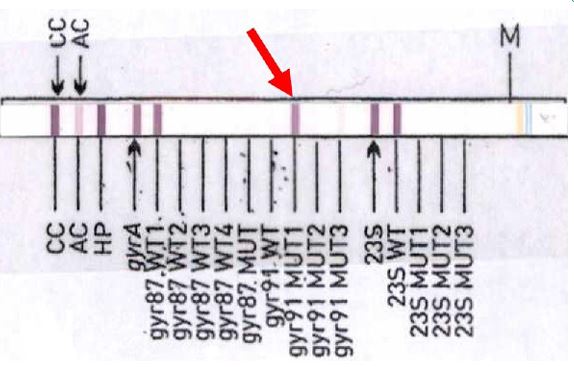
Abbreviations: CC: Conjugate Control; AC: Amplification Control; HP: H. Pylori DNA; MUT: Mutant; WT: Wild Type.
Discussion
Antibiotic resistance is a key determinant of H. pylori eradi cation outcomes [13,30]. Although phenotypic susceptibility testing such as agar dilution assay is considered the reference standard, it requires culture and is time-consuming and re source intensive. Moreover, the detection of resistance against several antibiotics can now be achieved by detecting different mutations or other genetic changes, resulting in a strong gen otype-phenotype correlation and enabling reliable molecular prediction, particularly for R-CLA and R-FLU [5,15,16]. Regard ing clarithromycin and fluoroquinolones, which still belong to the standard eradication regime [1,14], several studies have applied the molecular resistance testing of R-CLA and R-FLU, some of them even using FFPE tissue specimens of the gastric biopsies [16,17,19,20]. However, until now only one study in vestigated R-CLA in larger patient’s cohorts (n>100) by using FFPE tissue specimens [17]. Moreover, this study group evalu ated only potential risk factors for carrying R-CLA [17]. However, large FFPE-based analyses remain limited, especially for R-FLU and dual resistance cohorts.
In our cohort of 968 patients, R-CLA was the most prevalent resistance pattern and was significantly associated with female sex and advanced age. The predominance of R-CLA over R-FLU is consistent with many prior studies [8,9,24-26,29,30]. Moreover, in a Korean study R-CLA was the most powerful predictive factor of H. pylori eradication failure [32]. As already stated by Wu et al. [6], geographic differences in resistance are substantial and may partly reflect differences in antibiotic exposure and diverse H. pylori genotypes, also called H. pylori phylogeography. In a systematic review and meta-analysis, Kasani et al. revealed sig nificant geographical differences in macrolide-dependent H. py lori resistances ranging from 1 to 81.9% across various regions underscoring the need for local, tailored strategies [33].
Interestingly, our finding of female sex as significant risk fac tor for R-CLA is in line with numerous previous studies, which were in contrast mainly based on phenotypical methods. This phenomenon has been discussed by several authors. It is gen erally known that clarithromycin was widely administered as macrolide containing monotherapy for several diseases (e.g. respiratory infections [6,15]), most importantly due to gyneco logical infections [2]. Thus, it has been described that the risk of R-CLA increased with each prior course of macrolides, from 7% among patients with no prior macrolide use to 80% among patients with at least five prior courses [2]. In addition, it was suggested that gender-dependent physiological factors of the gastric mucosa might influence the female predominance in H.pylori antibiotic resistance as well [2,32,34]. Evidence for age as a risk factor is more heterogeneous across studies; our findings support an association between older age and R-CLA.
Notably, we observed a substantial dual-resistance cohort (R-CLA×FLU; n=151), larger than the R-FLU-only group. Molecu lar methods may detect mixed resistant populations more sen sitively than phenotypic methods, which can increase observed resistance prevalence [9,10,17,35]. Risk factor analyses for dual resistance in large FFPE cohorts have been sparse. Sanches et al. [17] examined gastric biopsies of 490 patients by sampling the tissue specimens in a specific solution that promotes imme diate RNA stabilization and protection (i.e., non-FFPE), followed by performing the same molecular testing as in the present study (GenoType HelicoDR). They found R-CLAxFLU in 4.3% of the cases (results concerning age and sex were not shown). The tendency of increasing multi-drug-resistant H. pylori strains was reported elsewhere as well [36]. In our cohort, female sex and older age were significant predictors of dual resistance. While the mechanisms remain unclear, this pattern may reflect cumu lative antibiotic exposure and warrants prospective evaluation.
This study has several limitations. First, it represents a sin gle-center, retrospective analysis of a routine diagnostic cohort. Consequently, selection bias cannot be excluded, as patients re ferred for molecular testing may differ from population-based cohorts, for example with respect to prior antibiotic exposure or eradication failure. Information on previous antibiotic treat ment and eradication history was not available and could not be included in the analysis. Second, mixed wild-type/mutant patterns were classified as resistant, which may contribute to higher observed resistance rates compared to culture-based studies. Third, clinicopathological correlations were limited to demographic variables (age and sex). Thus, future further in vestigation should address histological data (e.g. inflammatory activity, atrophy, and intestinal metaplasia).
From an operational perspective, molecular testing directly on FFPE tissue enables integration with histopathology and pro vides actionable resistance information with low failure rates. By contrast, culture-based testing can be limited by transport delays and pre-treatment with antibiotics or proton pump in hibitors. In this context, Wüppenhorst et al. [37] mentioned that in their study cohort of 2762 patients 40% were negative by culture for H. pylori and could not be analyzed for antimicro bial susceptibility, most likely due to these pre-analytical issues. On the other hand, the robustness of the molecular testing pro cedure used in the present study has been emphasized by sev eral previous studies as well [16,17,38].
Conclusion
Molecular resistance testing in FFPE gastric biopsy specimens provides resistance patterns for clarithromycin and fluoroqui nolones that are largely consistent with published epidemiolog ical data. We report a morpho-molecular based evaluation of a comparatively large dual-resistance cohort and identify female sex and advanced age as significant risk factors for R-CLA×FLU. FFPE-based molecular testing is a robust and practical approach that can complement routine histopathology and support im proved antibiotic stewardship in H. pylori eradication.
Declarations
Acknowledgement: We are grateful to Dr. Beate Sauerbrei (Trier, Germany) for expert technical assistance and helpful comments during the evaluation of study results.
References
- Costa JMC, Aguiar CEO, Leite Oliveira MMG, et al. Update on the pathogenesis and clinical management of Helicobacter pylori gastric infection and associated diseases. World J Gastrointest Pathophysiol. 2025; 16: 111432.
- White B, Winter M, DeSipio J, et al. Clinical factors implicated in antibiotic resistance in Helicobacter pylori patients. Microorganisms. 2022; 10: 103390.
- Chey WD, Leontiadis GI, Howden CW, et al. ACG clinical guideline: treatment of Helicobacter pylori infection. Am J Gastroenterol. 2017; 112: 212–239.
- Lee YC, Chiang TH, Chou CK, et al. Association between Helicobacter pylori eradication and gastric cancer incidence: a systematic review and meta-analysis. Gastroenterology. 2016; 150: 1113–1124.
- Malfertheiner P, Megraud F, Rokkas T, et al. Management of Helicobacter pylori infection: the Maastricht VI/Florence consensus report. Gut. 2022; 71: 1724–1762.
- Wu W, Yang Y, Sun G. Recent insights into antibiotic resistance in Helicobacter pylori eradication. Gastroenterol Res Pract. 2012; 723183.
- Megraud F, Coenen S, Versporten A, et al. Helicobacter pylori resistance to antibiotics in Europe and its relationship to antibiotic consumption. Gut. 2013; 62: 34–42.
- Megraud F, Bruyndonckx R, Coenen S, et al. Helicobacter pylori resistance to antibiotics in Europe in 2018 and its relationship to antibiotic consumption in the community. Gut. 2021; 70: 1815–1822.
- Nezami BG, Jani M, Alouani D, et al. Helicobacter mutations detected by next-generation sequencing in formalin-fixed paraffin-embedded gastric biopsy specimens are associated with treatment failure. J Clin Microbiol. 2019; 57: e01834-18.
- Bluemel B, Goelz H, Goldmann B, et al. Antimicrobial resistance of Helicobacter pylori in Germany, 2015 to 2018. Clin Microbiol Infect. 2020; 26: 235–239.
- Smith S, O’Morain C, McNamara D. Antimicrobial susceptibility testing for Helicobacter pylori in times of increasing antibiotic resistance. World J Gastroenterol. 2014; 20: 9912-9921.
- Arslan N, Yilmaz Ö, Demiray-Gürbüz E. Importance of antimicrobial susceptibility testing for the management of eradication in Helicobacter pylori infection. World J Gastroenterol. 2017; 23: 2854–2869.
- Kim JS, Lee H, Jeong Y, et al. Cost-effectiveness of tailored versus empirical therapy for Helicobacter pylori: a decision-tree analysis. Helicobacter. 2025; 30: e70081.
- Fischbach W, Bornschein J, Hoffmann JC, et al. Update S2k-guideline Helicobacter pylori and gastroduodenal ulcer disease of the German Society of Gastroenterology, Digestive and Metabolic Diseases (DGVS). Z Gastroenterol. 2024; 62: 261-321.
- Hu Y, Zhu Y, Lu NH. Novel and effective therapeutic regimens for Helicobacter pylori in an era of increasing antibiotic resistance. Front Cell Infect Microbiol. 2017; 7: 168.
- Cambau E, Allerheiligen V, Coulon C, et al. Evaluation of a new test, GenoType HelicoDR, for molecular detection of antibiotic resistance in Helicobacter pylori. J Clin Microbiol. 2009; 47: 3600-3607.
- Squarcio Sanches B, Miranda Martins G, Lima K, et al. Detection of Helicobacter pylori resistance to clarithromycin and fluoroquinolones in Brazil: a national survey. World J Gastroenterol. 2016; 22: 7587-7594.
- Dong F, Ji D, Huang R, et al. Multiple genetic analysis system based antibiotic susceptibility testing in Helicobacter pylori and high eradication rate with phenotypic resistance-guided quadruple therapy. Medicine. 2015; 94: e2056.
- Beheshtirouy S, Eyyazi S, Tarhriz V. Evaluation of mutations in 23S rRNA, rdxA and frxA genes of Helicobacter pylori in paraffin embedded gastric biopsy specimens from Iranian gastric cancer and gastritis patients. J Gastrointest Cancer. 2021; 52: 207-211.
- Yüzügüldü B, Üstün Y, Arslankoz S, et al. Clarithromycin-resistant Helicobacter pylori in Ankara, Turkey: detection by real-time PCR in formalin-fixed paraffin-embedded gastric biopsy samples. New Microbiol. 2024; 47: 324-329.
- Gillet L, Perreau C, Bruhl L, et al. Assessment of target enrichment library preparation and next-generation sequencing of paraffin-embedded gastric biopsies for Helicobacter pylori diagnosis and evaluation of virulome and resistome. Sci Rep. 2025; 15: 39811.
- Bai P, Zhou LY, Xiao XM, et al. Susceptibility of Helicobacter pylori to antibiotics in Chinese patients. J Dig Dis. 2015; 16: 464-470.
- Horie R, Handa O, Ando T, et al. Helicobacter pylori eradication therapy outcome according to clarithromycin susceptibility testing in Japan. Helicobacter. 2020; 25: e12698.
- Ji Z, Han F, Meng F, et al. Association of age and antibiotic resistance of Helicobacter pylori: a study in Jiaxing City, Zhejiang Province, China. Medicine. 2016; 96: e2831.
- Miendje Deyi VY, Bontems P, Vanderpas J, et al. Multicenter survey of routine determinations of resistance of Helicobacter pylori to antimicrobials over the last 20 years (1990–2009) in Belgium. J Clin Microbiol. 2011; 49: 2200-2209.
- Mosites E, Bruden D, Morris J, et al. Antimicrobial resistance among Helicobacter pylori isolates in Alaska, 2000–2016. J Glob Antimicrob Resist. 2018; 15: 148-153.
- Shao Y, Lu R, Yang Y, et al. Antibiotic resistance of Helicobacter pylori to 16 antibiotics in clinical patients. J Clin Lab Anal. 2018; 32: e22339.
- Shiota S, Reddy R, Alsarraj A, et al. Antibiotic resistance of Helicobacter pylori among male United States veterans. Clin Gastroenterol Hepatol. 2015; 13: 1616–1624.
- Tveit A, Bruce MG, Bruden DL, et al. Alaska sentinel surveillance study of Helicobacter pylori isolates from Alaska Native persons from 2000 to 2008. J Clin Microbiol. 2011; 49: 3638–3643.
- Xie J, Zhang ML, Guo M, et al. Antibiotic resistance of Helicobacter pylori and related risk factors in Hunan Province: a multicenter study. World J Gastroenterol. 2025; 31: 104835.
- Zullo A, Perna F, Hassan C, et al. Primary resistance in Helicobacter pylori strains isolated in northern and central Italy. Aliment Pharmacol Ther. 2007; 25: 1429–1434.
- Chang YW, Ko WJ, Oh CH, et al. Clarithromycin resistance and female gender affect Helicobacter pylori eradication failure in chronic gastritis. Korean J Intern Med. 2019; 34: 1022–1029.
- Kasani SM, Mofid M, Navidifar T, et al. Insights into Helicobacter pylori macrolide resistance: a comprehensive systematic review and meta-analysis. Front Microbiol. 2024; 15: 1481763.
- Moayyedi P, Chalmers SM, Axon AT. Patient factors that predict failure of omeprazole, clarithromycin, and tinidazole to eradicate Helicobacter pylori. J Gastroenterol. 1997; 32: 24–27.
- Tian L, Yin L, Wang L, et al. Direct detection of antibiotic resistance in Chinese Helicobacter pylori clinical isolates by sequencing-based approach. J Healthc Eng. 2022; 6436256.
- Li X, Yang X, Zhang L, et al. Trend of multidrug resistance of Helicobacter pylori strains isolated in Chengdu. Nat Sci. 2022; 14: 517–523.
- Wüppenhorst N, Draeger S, Stüger HP, et al. Prospective multicentre study on antimicrobial resistance of Helicobacter pylori in Germany. J Antimicrob Chemother. 2014; 69: 3127–3133.
- Miendje Deyi VY, Burette A, Bentatou Z, et al. Practical use of GenoType HelicoDR, a molecular test for Helicobacter pylori detection and susceptibility testing. Diagn Microbiol Infect Dis. 2011; 70: 557–560.