

Journal of Gastroenterology Research and Practice
Review Article - Open Access, Volume 6
Kefir: Unveiling the science behind a traditional fermented food - A narrative review of its composition, bioactivities, and therapeutic potential
Malek Ben Temessek*; Olfa Rebai; Sami Fattouch
University of Carthage, National Institute of Applied Sciences and Technology (INSAT), Tunisia.
*Corresponding Author : Malek Ben Temessek
University of Carthage, National Institute of Applied
Sciences and Technology (INSAT), LR21ES02, Laboratory
of EcoChemistry, 1080, Tunis, Tunisia.
Email: Malek.bentemessek@insat.ucar.tn
Received : Dec 10, 2025
Accepted : Jan 14, 2026
Published : Jan 21, 2026
Archived : www.jjgastro.com
Copyright : © Temessek MB (2026).
Abstract
Kefir, a traditional fermented milk beverage originating from the Caucasus Mountains, has garnered significant global interest due to its purported health benefits. This comprehensive review synthesizes current scientific knowledge on kefir, bridging traditional wisdom with modern research. We begin by detailing the complex microbiological composition of kefir grains, which host a unique symbiotic consortium of lactic acid bacteria, acetic acid bacteria, and yeasts embedded in a polysaccharide and protein matrix. The fermentation process yields a diverse array of bioactive compounds, including peptides, exopolysaccharides (kefiran), and short-chain fatty acids, which are responsible for its biological activities. We critically evaluate the evidence supporting kefir’s multifaceted bioactivities, such as its antimicrobial, anti-inflammatory, immunomodulatory, antioxidant, and anti proliferative properties. Furthermore, the review explores the potential therapeutic applications of kefir and its metabolites in managing metabolic syndromes, gastrointestinal disorders, and certain cancers, primarily based on in vitro and in vivo studies. Finally, we discuss the challenges in standardizing kefir production and the need for more robust, well-designed human clinical trials to fully validate its health-promoting claims and elucidate its mechanisms of action. This review underscores kefir’s potential as a promising functional food and a source for next-generation probiotic formulations and therapeutic agents.
Keywords: Kefir; Probiotic; Fermented beverage; Kefiran; Microbiome; Bioactive metabolites.
Citation: Temessek MB, Rebai O, Fattouch S. Kefir: Unveiling the science behind a traditional fermented food - A narrative review of its composition, bioactivities, and therapeutic potential. J Gastroenterol Res Pract. 2026; 6(1): 1243.
Introduction
The evolution of mankind has been accompanied by dietary changes, which have been shown to be essential to that evolu tion and to human welfare. In addition to being necessary for survival, nutrition is also important for the health and balance of the human body [1]. The development of innovative foods with clear health advantages has been encouraged by rising consumer demand for healthy foods and understanding of the influence of dietary practices on human wellbeing. A large va riety of innovative functional foods are now available on the market, with dairy products and beverages playing an essential role [2]. Fermented foods and drinks were among the earliest processed foods that humans consumed [3]. By giving the user beneficial bacteria and nutritional advantages due to modifica tions made to the food matrix during fermentation, fermented foods can contribute to health benefits [4]. Several species and even separate strains of microorganisms may be found in cer tain artisanal fermented foods, and the dynamics of the popu lation throughout processing are highly complicated [3]. Kefir a fermented milk beverage and water kefir, often referred to as “aquakefir” or “sugary kefir” a fermented non-dairy beverage, are two artisanal fermented drinks that are of particular inter est because to their natural and artisanal manufacture, which is compatible with sustainable technology [5]. Kefir is a low-alco hol fermented drink that is acidic and frothy due to the fermen tation carbonation of kefir grains with milk or water [6,7]. Its origins can be traced back to the Balkans, Eastern Europe, and the Caucasus, and its consumption has spread to other regions of the world over time due to its health-giving benefits [8]. Kefir grains are cauliflower-like florets that are white to yellowish white in color and made of a protein and carbohydrate matrix with a microbial population [9]. Both milk kefir and water ke fir are typically made from distinct probiotic-containing gelati nous particles called “milk kefir grains” and “water kefir grains.” These grains are used to make a pair of beverages produced by fermentation, each of which has unique physical, chemical, and microbiological compositions. Both milk and water kefir have useful characteristics. Milk kefir offers considerable levels of protein as well as probiotics and prebiotics, whereas water kefir can be a highly essential probiotic, prebiotic, and antioxi dant source for vegans and persons who are allergic to dairy products [10]. Numerous research on the potential health ben efits of kefir as a natural beverage containing probiotic bacteria and useful organic compounds have been published in the last few years. Probiotics are living bacteria that, when treated in adequate quantities, provide a health benefit to the host, ac cording to the Food and Agriculture Organization of the United Nations (FAO) and World Health Organization (WHO). Further more, data suggests that kefir’s exopolysaccharide, kefiran, has important physicochemical properties and biological activities that add value to the products [11]. In addition, several bio technological advancements have previously been proposed to create a kefir-like beverage with enhanced sensory, nutritional, and functional properties [12]. While numerous reviews have summarized the general health benefits of kefir, a comprehen sive and critical synthesis of the latest advancements is lacking. Specifically, there is a need to consolidate recent findings on the molecular mechanisms behind its bioactivity, the clinical trans lation of these effects in human trials, and the emerging innova tions in kefir production. This review aims to bridge this gap by not only providing an up-to-date overview of kefir’s composi tion and properties but also by offering a critical perspective on the challenges and future directions for its application as a functional food and potential therapeutic agent.
Composition and nutritive value of kefir grains
Kefir grains contain bacteria and fungus embedded in ke firan, a durable insoluble polysaccharide matrix consisting of glucose and galactose (Figure 1) [13]. This carbohydrate is bacterial in nature, generated by lactobacilli (Lactobacillus pa racasei, Lactobacillus kefiri, Lactobacillus parabuchneri, and Acetobacter lovaniensis) and yeast (Saccharomyces cerevisiae and Kluyveromyces lactis) that accumulate on matrix polysac charide and protein [14]. The kefir grains’ external surfaces seemed smooth and glossy to the human eye. According to Mei et al. [15], SEM analyses revealed that grain surfaces were quite rough. . In the inner portion of the grain, a variety of lactobacilli (long and curved), yeasts and fibrillar material were observed. The short lactobacilli and yeast were observed on the outer portion [16]. The inner region had a lower microbial cell den sity than the outside portion. Nonetheless, Brazilian kefir grains were examined by Leite et al. [17] which discovered rod-shaped bacteria in both the inner and outer grain regions, with yeasts being more prevalent in the outside portion. Whereas, Guzel seydim, et al. [18] found a diversity of lactobacilli but no yeast in the interior. A considerable number of long, curved bacte ria may be found in the polysaccharide matrix zone between the smooth and rough sides. These bacteria may be responsi ble for the kefiran that makes up the matrix [13]. According to research, the grain folding structure is caused by the fact that most LABs are hydrophilic and have a negative charge on their cell surface. Lactobacillus kefiranofaciens HL1 and Lactobacillus HL2 kefir are hydrophobic with a positively charged cell surface, enabling for self-aggregation [19]. As reported by Xie et al. [20], proteins on the bacterial cell wall surface and polysaccharides on the yeast cell wall both play key roles in co-aggregation and microbial adherence, as well as that, the yeast applied improves aggregation, adhesion, and survival in hostile environments.
In terms of nutritional content, Kefir’s nutritional benefit stems from its diverse chemical composition, which includes minerals, sugars, carbs, proteins, peptides, vitamins, and lip ids (Table 1). Even so, this composition varies greatly and is impacted by milk composition, the origin and composition of the grains used, fermentation time/temperature, and storage conditions [21]. Kefir has a significant amount of vitamins such as carotene, vitamins A, K, B1, B2, B5, C, B12, and folic acid. It is a source of amino acids like ammonia, serine, lysine, alanine, threonine, tryptophan, valine, lysine, methionine, phenylala nine, and isoleucine and minerals (Mg, Ca, P, Zn, Cu, Fe, Co, Mn, etc.) [14]. According to Sarkar [22], kefir contains at least 6% sug ars, 3.5% fat, 3% proteins, and 0.7% ash, but the most abundant part is the moisture which represent 90%. Based to research, ly sine is the most prevalent essential amino acid (376 mg/ 100 g), whereas tryptophan is the least abundant (70 mg/100 g) [23]. The primary by-products of the lactic fermentation process are lactic acid, CO2 , and ethanol. Aldehydes, traces of acetone, iso amyl alcohol, formic, propionic, and succinic acids, as well as a number of folates, are also present in kefir. Kefir’s pH ranges from 4.2 to 4.6; its ethanol concentration is between 0.5 and 2% (v/v); its lactic acid content is between 0.8 and 1% (w/v); and its CO2 level is between 0.08 and 0.2% (v/v) [21]. Peptides are recognized as a distinct and essential class of molecules produced during milk fermentation, accounting for a large por tion of the health advantages of fermented milk products [24]. Experiments on Tibetan kefir enabled the purification of a pep tide F3 with antibacterial activity against Escherichia coli and Staphylococcus aureus [25]. As per to Ebner et al. [26] studies, they were identified 236 peptides in bovine kefir produced from casein proteolysis and they were shown to have antibacterial, antioxidant, angiotensin-converting enzyme (ACE)-inhibitory, immunomodulatory, and antithrombotic properties. As well as that, they reported 35 peptides in bovine milk kefir that have an antihypertensive impact via ACE inhibition [27]. In addition to its chemical composition, the fermentation process increases the nutritional value of kefir by producing additional bioactive compounds such catechin, vanillin, ferulic acid, and salicylic acid [24]. Moreover, Kefir is a suitable alternative for lactose intolerant people, or those who cannot digest large amounts of lactose, the main sugar in milk. The fermenting process reduc es the lactose level of kefir while increasing the-galactosidase concentration [28]. As stated by altay et al. [29] researches, the presence of biogenic amines in kefir samples was caused by LAB activity. All samples included putrescine, cadaverine, and sper midine, whereas tyramine was discovered to be an abundant biogenic amine. High levels of biogenic amines are linked to the deterioration of fermented milk’s sensory characteristics and are regarded as an essential measure of quality and acceptabil ity. The presence of a high concentration of bioactive amines in fermented food is associated with an unpleasant bitter taste [30]. Despite the detailed characterization of kefir grains, a sig nificant challenge lies in the profound variability of their micro bial composition, which is highly dependent on geographical origin, substrate, and propagation techniques. This heterogene ity directly impacts the consistency of the final product’s nu tritional and bioactive profile, posing a major hurdle for indus trial standardization and reproducible health outcomes. Future research should focus on standardizing fermentation protocols and correlating specific microbial consortia with defined health benefits to ensure product efficacy and reliability.
Kefir a powerful probiotic
Probiotics are live microbial dietary supplements that ben efit the host by enhancing microbial equilibrium [14]. Probiot ics are widely used as bio-ingredients in many functional fer mented foods, and their beneficial benefits on human health and nutrition are continually growing [31]. By promoting the release of soluble factors or the generation of Short-Chain Fatty acids (SCFAs), probiotics may reduce the development of pathogenic bacteria, strengthen the gut’s defences against pathogen invasion, enhance epithelial barrier function, or treat disease processes [32]. The genus Bifidobacterium and the di verse group of LAB (Lactobacillus, Enterococcus) are the most often utilized probiotic bacteria; nevertheless, in recent years, yeasts and other microorganisms have also been explored as possible probiotics [31]. Probiotics must be alive in order to build a symbiotic equilibrium in the host’s digestive tract, em phasizing the relevance of microbial viability throughout gas trointestinal transit, particularly in the case of oral delivery [33]. Microbial survival rate is affected by treatment regimen, hence the use of symbiotic matrices for probiotic application and microbial viability maintenance has grown in importance [34]. Probiotic bacteria are susceptible to a variety of physico chemical stressors, including pH, acidity, temperature, and pre servatives [35]. One of the most popular probiotics and a po tent nutritional is kefir. Microorganisms develop in kefir grains, producing enzymes and other biogenic components that cause physicochemical changes in the environment. As a result, kefir has been increasingly used for medicinal purposes, as it has a high concentration of natural probiotics and is easily digestible [33]. Farnworth [36] claims that kefir is consumed daily in many hospitals in Russia because it is regarded as a “general health promoter,” works well to recover from digestive diseases, and is advised for mothers to consume during weaning. Furthermore, they demonstrated that some bacteria isolated from kefir were resistant to bile and low pH conditions and could cling to intes tinal epithelium [37]. Additionally, research conducted by Xie et al. [20] have shown that yeasts included in kefir increase LAB aggregation and adherence to epithelial cells; they also improve LAB gastrointestinal tolerance. Kefir grains can be considered as a natural repository of safe and definitely probiotic strains due to their diverse microbiota [4].
Molecular mechanisms of kefir’s bioactivity
A comprehensive understanding of kefir’s health benefits re quires elucidating its molecular mechanisms of action, which operate through a complex interplay of microbial and host pathways. The modulation of the gut microbiota is a founda tional event; kefir’s probiotics and their metabolites, particu larly short-chain fatty acids (SCFAs) like butyrate, promote a beneficial microbial community enriched in Bifidobacterium and Lactobacillus species. Butyrate, in turn, serves as a primary energy source for colonocytes, strengthening intestinal barrier function by upregulating tight junction proteins, thereby reduc ing endotoxemia and systemic inflammation [38]. Concurrently, kefir’s immunomodulatory effects are initiated when its struc tural components, such as exopolysaccharides and peptides, act as ligands for innate immune receptors like Toll-Like Recep tors (TLRs) on antigen-presenting cells. This interaction primar ily modulates the NF-�B signaling pathway, leading to a cali �B signaling pathway, leading to a cali B signaling pathway, leading to a cali brated cytokine response that enhances defense mechanisms while curtailing excessive inflammation [39]. In oncology, kefir’s antiproliferative properties extend beyond apoptosis induction to involve the regulation of critical cell signaling pathways. Bio active compounds in kefir have been shown to inhibit the PI3K/ AKT/mTOR pathway, a central driver of cell survival and growth, while simultaneously activating tumor suppressor pathways like p53 and stress-related MAPK pathways, collectively inducing cell cycle arrest and apoptosis in malignant cells [40]. Further more, the gut-brain axis serves as a critical conduit for kefir’s neuroprotective effects. Kefir-associated microbes influence central nervous system function by producing neurotransmit ters (e.g., GABA, serotonin), modulating the Hypothalamic-Pi tuitary-Adrenal (HPA) axis to reduce cortisol levels, and sending vagal nerve signals that decrease neuroinflammation, thereby improving cognitive function and emotional regulation [41]. These interconnected molecular pathways underscore kefir’s role as a potent modulator of host physiology at a systemic level.
Biological properties of Kefir
Consumers nowadays prefer food with functional character istics that can improve their health. The notion of “functional foods” has influenced consumer views of healthful foods [42]. That’s why researches on the advantages of kefir are getting deeper. Indeed, the diverse microbial consortium of kefir grains is responsible for the large number of metabolites generated, which contribute to a variety of health-promoting benefits (Fig ure 2) [43].
Antimicrobial effect of kefir
Kefir’s antibacterial effects are due to a variety of parame ters, including nutritional competition and the intrinsic activity of organic acids, H2 O2 , acetaldehyde, CO2 , and bacteriocins cre ated during the fermentation process [44]. Obviously, Golowc zyc et al. [37] confirmed that the kefir grain-isolated Lactococ cus lactis strain DPC3147 generated a bacteriocin known as lacticin 3147 that was antimicrobial against Escherichia coli, Listeria monocytogenes, Salmonella typhimurium, and Salmo nella enteritidis. Additionally, Bacteriocin F1, an antimicrobial peptide isolated from Tibetan kefir and composed of 18 amino acids, displayed bacteriostatic activity against Escherichia coli at 62.5 g/mL. The antibacterial action is mediated through E. coli cell outer and inner membrane permeability. Bacteriocin F1 has the extra benefit of being resistant to heat, pH, and protease treatment, implying its use in food preservation [25]. Moreover, Lactobacillus plantarum C4 isolated from kefir protects against Yersinia enterocolitica infection of the intestine [24]. Ismail et al. [45] demonstrated that kefir suspension had a greater in hibitory activity against Streptococcus faecalis and Fusarium graminearum. Thus, Kefir concentrations ranging from 7 to 10% (w/w) were able to totally block Aspergillus flavus sporulation and, as a result, aflatoxin B1 synthesis, demonstrating kefir’s an tifungal effects against filamentous fungi. This is explained by the fact that organic acids are formed during the fermentation of kefir, which can change the aflatoxin B1 molecule, turning it into less dangerous forms such as aflatoxicol aflatoxin B, and B2a. In this context, kefir looks to be a safe food preservation option, giving protection against aflatoxin B1 toxicity [21].
Anti-inflammatory effect of kefir
Complications of neuroinflammatory illnesses and inflam mation in chronic conditions are the leading causes of morbid ity and death worldwide. Growing data from both in vitro and in vivo research has demonstrated significant antiinflammatory and immunomodulatory potentials, with kefir therapy demon strating an increase in anti-inflammatory mediators while de creasing pro-inflammatory cytokines [11]. Rosa et al. [46] dis covered that administering kefir for a duration of ten weeks led to a decrease in the expression of the inflammatory cytokine IL-1 in adipose tissue. Simultaneously, it increased the expres sion of the anti-inflammatory cytokine IL-10 and lowered the levels of oxidative markers such as malondialdehyde (MDA) and hydroperoxides. Furthermore, in this study, they were discov ered that the freeze-dried extract of Tibetan kefir polysaccha ride exhibited potent inhibition of the hyaluronidase enzyme. Moreover, Kefiran has demonstrated the ability to scavenge nitric oxide, similar to quercetin, a well-known antioxidant [46].
Exopolysaccharide treatment generated by Lactobacillus ke firanofaciens, to mice triggered a mucosal response in the gut by enhancing IgA production in small and large intestines, as well as promoting systemic immunity through the generation of cytokines in the intestinal fluid and blood serum [47]. Several in vivo studies have also revealed that kefir peptides have potent immunostimulant properties. In NF-B luciferase+/+ transgenic mice, kefir peptides generated from kefir grain fermentation with milk proteins were reported to have anti-inflammatory ef fects on PM4.0-induced lung inflammation. Thus, they found a decrease in PM4.0-induced inflammatory cell infiltration and the generation of inflammatory mediators such as TNF-, IL-1, and IL-4 in lung tissue. This was accomplished by inhibiting NF-B signalling [48].
Antioxidant activity of kefir
Antioxidants act as scavengers of free radicals. They protect the body from damage caused by unstable molecules or free radicals created by stress and other environmental forces. Ke fir exhibits robust antioxidant activity. For instance, research has shown that kefir has the ability to scavenge free radicals, such as DPPH and superoxide radicals, and inhibit lipid peroxi dation. Moreover, consumption of kefir increases the level of glutathione peroxidase and reduces the level of malondialde hyde, which are involved in controlling oxidative stress [14]. Ac cording to Yilmaz-Ersan et al. [49] indicated that kefir samples fermented with kefir grains demonstrated superior antioxidant effectiveness, as assessed through DPPH and ABTS assays, com pared to kefir samples fermented with starter cultures. Like wise, the exopolysaccharide isolated from Tibetan kefir grains during milk fermentation exhibited substantial antioxidant ac tivities in vitro. Additionally, it provided protection to proteins from oxidative damage in a concentration-dependent manner [50]. The research conducted by Ghoneum and Felo [51] which based on the evaluation of the antioxidant properties of a Lac tobacillus kefiri (PFT) in oxidative stress-induced rats aged 10 months; they revealed that the consumption of PFT resulted in a notable increase in the activities of antioxidant enzymes such as superoxide dismutase, catalase, and glutathione peroxidase. Additionally, PFT led to a reduction in oxidative stress biomark ers including nitric oxide and malondialdehyde, and a reversal of decreases in total antioxidant capacity, glutathione levels, and anti-hydroxyl radical content.
Anticancer properties of kefir
Recent investigations have revealed promising anticancer properties of kefir and its bioactive compounds. The antiprolif erative effects of kefir are attributed to multiple mechanisms, including apoptosis induction, cell cycle arrest, and inhibition of metastatic potential. Lactobacillus kefiri P-IF, isolated from Turkish kefir grains, demonstrated significant cytotoxic activity against human colon cancer cells (HT-29) through the induction of apoptosis and G0/G1 cell cycle arrest [6]. Furthermore, ke firan, the primary exopolysaccharide of kefir grains, exhibited selective cytotoxicity against various cancer cell lines while showing minimal toxicity to normal cells [52]. The peptides derived from kefir fermentation have also shown remarkable anticancer potential. Studies by Wang et al. [53] identified spe cific bioactive peptides that demonstrated anti-proliferative effects against breast cancer cells (MCF-7) and cervical cancer cells (HeLa). The mechanism involves the modulation of pro apoptotic and anti-apoptotic gene expression, leading to pro grammed cell death in malignant cells [54]. Additionally, recent research has highlighted the role of kefir in enhancing the ef ficacy of conventional chemotherapy while reducing its adverse effects, suggesting potential applications as an adjuvant thera py in cancer treatment [55].
Metabolic health benefits
Glycemic control and diabetes management
The impact of kefir consumption on glucose metabolism has gained considerable attention in recent years. Clinical studies have demonstrated that regular kefir consumption significant ly improves glucose tolerance and insulin sensitivity in both healthy individuals and patients with type 2 diabetes mellitus. The mechanism involves the modulation of incretin hormones, particularly Glucagon-Like Peptide-1 (GLP-1), which enhanc es insulin secretion and delays gastric emptying [56]. A ran domized controlled trial conducted by Ostadrahimi et al. [57] showed that 8-week consumption of probiotic kefir significantly reduced fasting blood glucose, hemoglobin A1C, and improved insulin resistance in patients with type 2 diabetes. The benefi cial effects were attributed to the diverse probiotic strains pres ent in kefir, particularly Lactobacillus casei and Lactobacillus acidophilus, which modulate gut microbiota composition and enhance short-chain fatty acid production [58].
Lipid profile modulation
Kefir consumption has been consistently associated with fa vorable changes in lipid metabolism. Multiple studies have re ported significant reductions in total cholesterol, Low-Density Lipoprotein (LDL) cholesterol, and triglycerides, accompanied by increases in High-Density Lipoprotein (HDL) cholesterol [59]. The cholesterol-lowering (hypocholesterolemic) properties of kefir are mediated through three primary and interconnected biological mechanisms. First, certain probiotic bacteria within kefir have the ability to bind to bile acids in the intestine. Since bile acids are synthesized from cholesterol, their increased excretion forces the liver to draw upon existing cholesterol reserves to produce new bile acids, thereby reducing circulat ing cholesterol levels [60]. Second, the fermentation process generates specific bioactive metabolites, which can inhibit the activity of HMG-CoA reductase, the rate-limiting enzyme in the endogenous cholesterol synthesis pathway in the liver [61]. Finally, the fermentation of dietary fibers by kefir’s probiotics produces Short-Chain Fatty Acids (SCFAs), particularly propio nate. Upon absorption, propionate travels to the liver where it further suppresses hepatic cholesterol synthesis [62]. Thus, kefir acts through a synergistic combination of enhancing cho lesterol excretion, directly inhibiting its production, and modu lating hepatic metabolic pathways. Recent meta-analyses have confirmed that kefir consumption leads to a mean reduction of 7-12% in total cholesterol and 8-15% in LDL cholesterol, with effects becoming apparent after 4-8 weeks of regular consump tion [63].
Cardiovascular health effects
The cardiovascular benefits of kefir extend beyond lipid profile improvements. Kefir consumption has been associated with significant reductions in blood pressure, particularly in in dividuals with hypertension. The antihypertensive effects are primarily attributed to Angiotensin-Converting Enzyme (ACE) inhibitory peptides generated during milk protein fermentation [64]. Recent studies have identified specific bioactive peptides in kefir with potent ACE inhibitory activity, including peptides derived from β-casein and �-casein hydrolysis. These peptides demonstrate IC50 values ranging from 0.15 to 2.8 mg/mL, indi cating strong antihypertensive potential [65]. Additionally, kefir consumption improves endothelial function through enhanced nitric oxide production and reduced oxidative stress, contribut ing to overall cardiovascular health [66].
Neuroprotective properties
Emerging research illuminates the significant neuroprotec tive potential of kefir, primarily mediated through its influence on the gut-brain axis. The mechanisms by which kefir’s probiot ics confer these benefits are multifaceted. Firstly, specific bac terial strains present in kefir are capable of producing key neu rotransmitters, such as GABA, serotonin, and dopamine, which can directly modulate neuronal excitability and mood [67]. Fur thermore, kefir consumption contributes to a reduction in sys temic and neuroinflammatory markers, thereby creating a less hostile environment for neurons and mitigating damage associ ated with inflammation [68]. A third critical pathway involves the strengthening of the Blood-Brain Barrier (BBB); probiotics enhance its integrity and reduce permeability, which protects the brain from circulating toxins and inflammatory agents [69]. Collectively, these interconnected pathways neurotransmitter production, anti-inflammatory action, and BBB fortification, un derscore kefir’s promising role in supporting brain health and preventing neurological decline. Recent animal studies have demonstrated that kefir consumption improves cognitive func tion, reduces anxiety and depression-like behaviors, and pro vides protection against neurodegenerative diseases. The neu roprotective effects are mediated through the modulation of microglial activation, reduction of pro-inflammatory cytokines, and enhancement of Brain-Derived Neurotrophic Factor (BDNF) expression [70]. Furthermore, Tanure et al. [71] demonstrated that kefir peptides significantly improved memory performance and reduced neuroinflammation in aged mice models.
Recent innovations in kefir production and processing
Novel fermentation substrates
Recent research has explored the use of alternative sub strates for kefir production to enhance nutritional value and expand consumer accessibility. Plant-based milk alternatives, including oat, rice, soy, and almond milk, have been success fully fermented using kefir grains, resulting in vegan-friendly products with comparable probiotic content [72]. Studies have shown that the fermentation of plant-based substrates by kefir grains produces unique bioactive compounds not found in tra ditional milk kefir. For instance, oat kefir contains higher levels of β-glucans, which contribute to cholesterol-lowering effects, while soy kefir is enriched with isoflavones that exhibit estro genic and antioxidant activities [73]. Moreover, Randazzo et al [74] demonstrated that coconut milk kefir showed enhanced antimicrobial properties compared to traditional milk kefir (Fig ure 3).
Microencapsulation technologies
Microencapsulation has emerged as a pivotal strategy to en hance the viability of kefir probiotics, which are often vulnerable to the harsh conditions encountered during industrial process ing and storage. This technology functions by entrapping the sensitive microorganisms within protective matrices, effectively shielding them from detrimental factors such as low pH, high temperatures, and oxygen exposure. Significant advances have been made in refining these techniques. For instance, alginate based encapsulation has proven highly effective in significantly improving the survival rates of specific strains like Lactobacillus kefiri when subjected to simulated gastric fluids [75]. Similarly, the spray-drying technique, when optimized with protective compounds like whey proteins or maltodextrins, enables the production of stable kefir powders with markedly higher pro biotic viability [76]. Furthermore, coacervation methods, which involve the phase separation of polymers, provide superior con trol over the release of bacteria and enhance the retention of their bioactive metabolites throughout the manufacturing pro cess [77]. Collectively, these microencapsulation technologies are crucial for ensuring that the health-promoting, live probiot ics in kefir reach the consumer in a viable and active state.
Functional ingredient fortification
Contemporary food science research is increasingly focused on the strategic fortification of kefir to amplify its intrinsic health benefits and create advanced functional foods. This approach in volves supplementing kefir with bioactive ingredients that work synergistically with its native probiotics and metabolites. A key area of investigation is the incorporation of prebiotic fibers such as inulin, fructooligosaccharides (FOS), and Galactooligosaccha rides (GOS), which selectively stimulate the growth and activity of kefir’s beneficial microorganisms, creating a potent synbiotic product [78]. Furthermore, to significantly boost kefir’s antioxi dant capacity, studies have successfully enriched it with plant based extracts from sources like green tea, turmeric, and ber ries, which provide concentrated phenolic compounds that help combat oxidative stress [13]. For enhanced natural preservation and potential antimicrobial health benefits, essential oils from oregano, thyme, and rosemary have been integrated, leverag ing their potent bioactive properties [79]. Lastly, some research explores the direct addition of exogenous bioactive peptides, which can further augment kefir’s profile with targeted benefits such as improved antihypertensive or immune-modulatory ef fects [80]. Through these fortification strategies, kefir is trans formed from a probiotic beverage into a tailored nutritional vehicle designed to address specific health and wellness needs.
Clinical applications and therapeutic potential
Gastrointestinal disorders
The therapeutic potential of kefir is increasingly supported by clinical evidence, particularly in the management of gastrointestinal disorders. Systematic reviews of randomized con trolled trials substantiate its efficacy, demonstrating significant benefits across a spectrum of conditions. For individuals with Irritable Bowel Syndrome (IBS), kefir consumption has been as sociated with a notable reduction in symptom severity scores and an improved quality of life [81]. In the context of Inflamma tory Bowel Disease (IBD), clinical studies indicate that kefir can contribute to decreased systemic inflammatory markers and support mucosal healing [82]. Furthermore, kefir serves as an effective adjunct therapy for antibiotic-associated diarrhea, not only accelerating recovery time but also reducing the incidence of severe complications like Clostridioides difficile infections [83]. Its well-established role in alleviating lactose intolerance symptoms, by improving lactose digestion through its microbial lactase activity, further underscores its digestive benefits [84]. These multifaceted therapeutic effects are primarily mediated through kefir’s ability to restore a healthy balance of the gut microbiota, enhance the integrity of the intestinal barrier, and modulate local immune responses, collectively promoting gas trointestinal homeostasis.
Immune system modulation
A growing body of immunological research indicates that regular consumption of kefir contributes to a robust and bal anced immune system by modulating both innate and adaptive immune responses. The probiotics and metabolites present in kefir interact with the Gut-Associated Lymphoid Tissue (GALT), which houses a significant portion of the body’s immune cells, leading to systemic effects. Key mechanisms include the en hancement of innate immunity through the activation of mac rophages, boosting their phagocytic capacity to clear pathogens and their production of key signaling molecules called cytokines [21]. Furthermore, kefir has been shown to stimulate the activ ity of Natural Killer (NK) cells, thereby enhancing their ability to identify and destroy virally infected or cancerous cells [85]. On the adaptive immunity front, kefir components help modulate T-cell responses, promoting a balanced interplay between Th1 and Th2 pathways and supporting the activation of regulatory T-cells, which are crucial for preventing excessive inflammation and autoimmune reactions [86]. Finally, a critical line of de fense is strengthened at the mucosal level, where kefir intake has been demonstrated to boost the production of secretory immunoglobulin A (sIgA), an antibody essential for neutraliz ing pathogens at the intestinal barrier [87]. Collectively, these actions enhancing frontline defenses, fine-tuning targeted im mune responses, and fortifying the mucosal barrier, underscore kefir’s significant potential as a dietary modulator of immune function.
Current challenges and limitations
Despite the promising evidence supporting kefir’s health benefits, several significant challenges and limitations must be addressed to translate traditional knowledge into evidence based applications and standardized products. A critical analy sis of the current literature reveals key areas requiring further investigation and innovation.
Limitations of existing studies and standardization hurdles
A primary limitation hindering the validation of kefir’s ef fects is the scarcity of large-scale, long-term, Randomized Con trolled Trials (RCTs) in human populations. Many claims are based on in vitro studies or animal models, which do not always directly translate to human physiology. Furthermore, a major confounding factor across studies is the profound variability in the microbial composition of kefir grains, which is influenced by geographical origin, substrate, and propagation methods. This heterogeneity leads to inconsistent compositional profiles of the final beverage, making it difficult to compare results be tween studies and establish causal links between specific mi crobial strains or metabolites and observed health outcomes. Future research must prioritize the precise molecular charac terization of the kefir used in clinical interventions, reporting detailed metagenomic and metabolomic data to ensure repro ducibility and reliability.
Technical and industrial challenges
The industrial-scale production of kefir with guaranteed pro biotic viability and consistent quality remains a challenge. The preservation of live microorganisms during processing, stor age, and gastrointestinal transit is difficult. While microencap sulation technologies offer promising solutions, they face their own limitations, including potential alterations to the sensory properties of the final product, scalability issues, and increased production costs [88]. Developing cost-effective encapsulation methods that robustly protect probiotics without compromis ing consumer acceptance is a key area for future technological development.
Safety and regulatory considerations
The artisanal nature of kefir grains, while advantageous for microbial diversity, raises questions regarding the safety of uncharacterized microbial strains, particularly for immuno compromised individuals. Although kefir has a long history of safe consumption, rigorous safety assessments for specific au tochthonous strains are necessary. Moreover, the regulatory landscape for health claims associated with fermented foods is complex. Obtaining authorized health claims from bodies like the European Food Safety Authority (EFSA) or the U.S. Food and Drug Administration (FDA) requires a high level of scientific evi dence, which is currently limited for kefir due to the aforemen tioned standardization issues [89].
Conclusion and future perspectives
Kefir represents a remarkable example of how traditional fermented foods can contribute to modern healthcare through their complex microbiological compositions and diverse bioac tive compounds. The extensive research conducted over the past decade has firmly established kefir’s potential as a func tional food with significant therapeutic applications. The grow ing body of evidence supporting kefir’s health benefits, coupled with increasing consumer awareness of the gut-health connec tion, positions kefir as a key player in the functional food mar ket. However, several challenges remain, including standardiza tion of production methods, quality control measures, and the need for well-designed clinical trials to establish optimal dosing regimens and treatment protocols.
Future research should focus on elucidating the mechanisms underlying kefir’s health effects, developing standardized pro duction methods, and conducting large-scale clinical trials to establish evidence-based therapeutic applications. The integra tion of omics technologies, including genomics, proteomics, and metabolomics, will provide deeper insights into kefir’s mode of action and facilitate the development of next-generation probi otic products.
As our understanding of the human microbiome continues to evolve, kefir’s role in maintaining and restoring microbial bal ance will likely expand, positioning this ancient fermented bev erage as a cornerstone of modern preventive and therapeutic nutrition. The convergence of traditional knowledge and mod ern scientific methods promises exciting developments in kefir research, with potential applications extending far beyond con ventional nutritional supplementation.
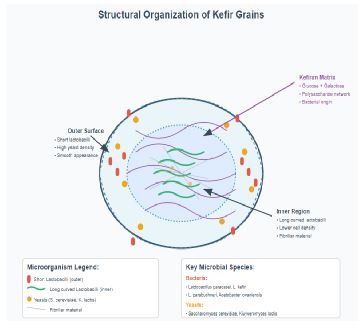
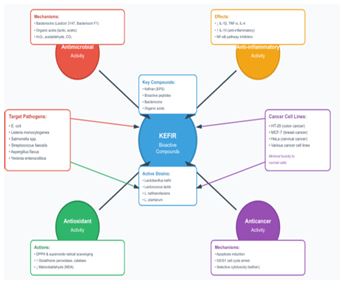
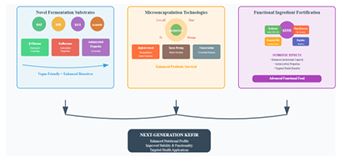
Table 1: Nutritional composition and bioactive properties of milk kefir.
| Proteins | ∼3% | - | Sarkar (2008) | |
| Lipids | ∼3.5% | - | Sarkar (2008) | |
| Carbohydrates | ≥ 6% | - | Sarkar (2008) | |
| Ash | ∼0.7% | - | Sarkar (2008) | |
| Vitamins and Minerals | Vitamins (A, K, B1, B2, B5, C, B12, Carotene, Folic Acid) | Variable | Nutritional Value | Sharifi et al. (2017) |
| Minerals (Mg, Ca, P, Zn, Cu, Fe, Co, Mn) | Variable | Nutritional Value | Sharifi et al. (2017) | |
| Essential Amino Acids | Lysine | 376 mg/100g | Most abundant essential amino acid | Liutkevičius and Šarkinas (2004) |
| Tryptophan | 70 mg/100g | Least abundant essential amino acid | Liutkevičius and Šarkinas (2004) | |
| Other EAA*: Serine, Alanine, Threonine, Valine, Methionine, Phenylalanine, Isoleucine | Variable | - | Sharifi et al. (2017) | |
| Physicochemical Parameters | pH | 4.2-4.6 | - | Rosa et al. (2017) |
| Lactic acid | 0.8-1% (w/v) | Fermentation product | Rosa et al. (2017) | |
| Ethanol | 0.5-2% (v/v) | Fermentation product | Rosa et al. (2017) | |
| CO2 | 0.08-0.2% (v/v) | Fermentation product | Rosa et al. (2017) | |
| Lactose | - | Improved digestibility (lactose intolerance) | Arslan (2015) | |
| β-galactosidase | - | Lactose hydrolysis | Arslan (2015) | |
| Bioactive Peptides | Peptide F3 (Tibetan Kefir) | ND | Antibacterial activity (E. coli, S. aureus) | Miao et al. (2016) |
| β-casein-derived peptides | 236 identified peptides | Antibacterial, Antioxidant, ACE-inhibitory, Immunomodulatory, Antithrombotic | Ebner et al. (2015) | |
| Antihypertensive peptides | 35 identified peptides | ACE inhibition | Amorim et al. (2019) | |
| Phenolic Compounds | Catechin, Vanillin, Ferulic acid, Salicylic acid | Products of fermentation | Antioxidant activity | Farag et al. (2020) |
| Biogenic Amines | Putrescine, Cadaverine, Spermidine | ND | Products of LAB metabolism | Altay et al. (2013) |
| Tyramine | Most abundant amine | Quality indicator; bitter taste at high concentrations | Altay et al. (2013); Takahashi and Kohno (2016) |
|
| Other Metabolites | Aldehydes, Acetone, Isoamyl alcohol | Traces | Volatile aromatic compound | Rosa et al. (2017) |
| Organic acids (Formic, Propionic, Succinic) | Variable | Fermentation products | Rosa et al. (2017) | |
| Folates | Variable | Nutritional value | Rosa et al. (2017) |
Declarations
Funding: This research did not receive funding.
Competing interests: The authors have declared no compet ing interests.
Author contributions: Writing-original draft: M.B. T; Review and editing: O.R; Supervision: S.F. All authors read and approved the final manuscript.
Data availability: No datasets were generated or analysed during the current study.
References
- Mota de Carvalho N, Costa EM, Silva S, Pimentel L, Fernandes TH, Pintado ME. Fermented foods and beverages in human diet and their influence on gut microbiota and health. Fermentation. 2018; 4: 90.
- Łopusiewicz Ł, Drozłowska E, Trocer P, Kwiatkowski P, Bartkowiak A, Gefrom A, et al. The effect of fermentation with kefir grains on the physicochemical and antioxidant properties of beverages from blue lupin (Lupinus angustifolius L.) seeds. Molecules. 2020; 25: 5791.
- Marco ML, Heeney D, Binda S, Cifelli CJ, Cotter PD, Foligné B, et al. Health benefits of fermented foods: microbiota and beyond. Curr Opin Biotechnol. 2017; 44: 94–102.
- Bengoa AA, Dardis C, Garrote GL, Abraham AG. Health-promoting properties of Lacticaseibacillus paracasei: a focus on kefir isolates and exopolysaccharide-producing strains. Foods. 2021; 10: 2239.
- Lynch KM, Wilkinson S, Daenen L, Arendt EK. An update on water kefir: microbiology, composition and production. Int J Food Microbiol. 2021; 345: 109128.
- Zamberi NR, Abu N, Mohamed NE, Nordin N, et al. The antimetastatic and antiangiogenesis effects of kefir water on murine breast cancer cells. Integr Cancer Ther. 2016; 15: NP53-NP66.
- Garofalo C, Ferrocino I, Reale A, Sabbatini R, Milanović V, Alkić Subašić M, et al. Study of kefir drinks produced by backslopping method using kefir grains from Bosnia and Herzegovina: microbial dynamics and volatilome profile. Food Res Int. 2020; 137: 109369.
- Prado MR, Blandón LM, Vandenberghe LPS, Rodrigues C, Castro GR, Thomaz-Soccol V, Soccol CR. Milk kefir: composition, microbial cultures, biological activities, and related products. Front Microbiol. 2015; 6: 1177.
- Touranlou FA, Noori SMA, Salari A, Afshari A, Hashemi M. Application of kefir for reduction of contaminants in the food industry: a systematic review. Int Dairy J. 2023: 105748.
- Guzel-Seydim ZB, Gökırmaklı Ç, Greene AK. A comparison of milk kefir and water kefir: physical, chemical, microbiological and functional properties. Trends Food Sci Technol. 2021; 113: 42–53.
- Azizi NF, Kumar MR, Yeap SK, Abdullah JO, et al. Kefir and its biological activities. Foods. 2021; 10: 1210.
- M’hir S, Filannino P, Mejri A, Tlais AZA, Di Cagno R, Ayed L. Functional exploitation of carob, oat flour, and whey permeate as substrates for a novel kefir-like fermented beverage: an optimized formulation. Foods. 2021; 10: 294.
- Nielsen B, Gürakan GC, Ünlü G. Kefir: a multifaceted fermented dairy product. Probiotics Antimicrob Proteins. 2014; 6: 123–35.
- Sharifi M, Moridnia A, Mortazavi D, Salehi M, et al. Kefir: a powerful probiotic with anticancer properties. Med Oncol. 2017; 34: 1–7.
- Mei J, Guo Q, Wu Y, Li Y. Microbial diversity of a Camembert-type cheese using freeze-dried Tibetan kefir coculture as starter culture. PLoS One. 2014; 9: e111648.
- Gao X, Li B. Chemical and microbiological characteristics of kefir grains and their fermented dairy products: a review. Cogent Food Agric. 2016; 2: 1272152.
- Leite AMDO, Miguel MAL, Peixoto RS, Rosado AS, et al. Microbiological, technological and therapeutic properties of kefir: a natural probiotic beverage. Braz J Microbiol. 2013; 44: 341–49.
- Guzel-Seydim ZE, Wyffels JT, Seydim AC, Greene AK. Turkish kefir and kefir grains: microbial enumeration and electron microscopic observation. Int J Dairy Technol. 2005; 58: 25–29.
- Wang SY, Chen KN, Lo YM, Chiang ML, et al. Investigation of microorganisms involved in biosynthesis of the kefir grain. Food Microbiol. 2012; 32: 274–85.
- Xie N, Zhou T, Li B. Kefir yeasts enhance probiotic potentials of Lactobacillus paracasei H9. Food Res Int. 2012; 45: 394–401.
- Rosa DD, Dias MM, Grześkowiak ŁM, Reis SA, et al. Milk kefir: nutritional, microbiological and health benefits. Nutr Res Rev. 2017; 30: 82–96.
- Sarkar S. Biotechnological innovations in kefir production: a review. Br Food J. 2008; 110: 283–95.
- Liutkevičius A, Šarkinas A. Studies on the growth conditions and composition of kefir grains. Vet Zootec. 2004; 25: 64–70.
- Farag MA, Jomaa SA, Abd El-Wahed A, El-Seedi HR. The many faces of kefir fermented dairy products. Nutrients. 2020; 12: 346.
- Miao J, Liu G, Ke C, Fan W, et al. Inhibitory effects of a novel antimicrobial peptide from kefir against Escherichia coli. Food Control. 2016; 65: 63–72.
- Ebner J, Arslan AA, Fedorova M, Hoffmann R, et al. Peptide profiling of bovine kefir reveals unique peptides released from caseins. J Proteomics. 2015; 117: 41–57.
- Amorim FG, Coitinho LB, Dias AT, Friques AGF, et al. Identification of new bioactive peptides from kefir milk. Food Chem. 2019; 282: 109–19.
- Arslan S. Chemical, microbiological and nutritional characteristics of kefir. CyTA J Food. 2015; 13: 340–45.
- Altay F, Karbancıoglu-Güler F, Daskaya-Dikmen C, Heperkan D. Traditional Turkish fermented non-alcoholic beverages. Int J Food Microbiol. 2013; 167: 44–56.
- Takahashi K, Kohno H. Different polar metabolites and protein profiles between Japanese ginjo sake qualities. PLoS One. 2016; 11: e0150524.
- Tamang JP, Shin DH, Jung SJ, Chae SW. Functional properties of microorganisms in fermented foods. Front Microbiol. 2016; 7: 578.
- Cremon C, Barbaro MR, Ventura M, Barbara G. Pre- and probiotic overview. Curr Opin Pharmacol. 2018; 43: 87–92.
- de Lima MDSF, de Souza KMS, Albuquerque WWC, Teixeira JAC, et al. Saccharomyces cerevisiae from Brazilian kefir. Microb Pathog. 2017; 110: 670–77.
- Mitropoulou G, Nedovic V, Goyal A, Kourkoutas Y. Immobilization technologies in probiotic food production. J Nutr Metab. 2013: 2013.
- Terpou A, Gialleli AI, Bekatorou A, Dimitrellou D, et al. Sour milk production by wheat bran supported probiotic biocatalyst. Food Bioprocess Technol. 2017; 10: 184–92.
- Farnworth ER. Kefir: from folklore to regulatory approval. J Nutraceuticals Funct Med Foods. 1999; 1: 57–68.
- Golowczyc MA, Gugliada MJ, Hollmann A, Delfederico L, et al. Characterization of homofermentative lactobacilli isolated from kefir grains. J Dairy Res. 2008; 75: 211–17.
- Xu B, Wang Z, Wang Y, Zhang K, et al. Milk-derived Lactobacillus relieves antibiotic-induced diarrhea in mice. Food Funct. 2024; 15: 5329–42.
- Dentice Maidana S, Ortiz Moyano R, Elean M, Imamura Y, et al. Modulation of intestinal immune response by water kefir. Microbiol Res. 2024; 15: 1239–50.
- El Sayed NS, Kandil EA, Ghoneum MH. Kefir grain product modulates gut microbiome in Alzheimer’s disease mice. Front Pharmacol. 2021; 12: 666502.
- Foster JA, Rinaman L, Cryan JF. Stress and the gut-brain axis. Neurobiol Stress. 2017; 7: 124–36.
- Ganatsios V, Nigam P, Plessas S, Terpou A. Kefir as a functional beverage. Beverages. 2021; 7: 48.
- Plessas S, Nouska C, Mantzourani I, Kourkoutas Y, et al. Microbiological exploration of kefir grains. Fermentation. 2017; 3: 1.
- Powell JE. Bacteriocins in kefir grains [dissertation]. Stellenbosch: University of Stellenbosch; 2006.
- Ismaiel AA, Ghaly MF, El-Naggar AK. Milk kefir: ultrastructure and antimicrobial activity. Curr Microbiol. 2011; 62: 1602–09.
- Rosa DD, Grześkowiak ŁM, Ferreira CL, Fonseca ACM, et al. Kefir improves endothelial function in rats. Food Funct. 2016; 7: 3390–401.
- Vinderola G, Perdigón G, Duarte J, Farnworth E, Matar C. Effects of kefir exopolysaccharide on gut immunity. Cytokine. 2006; 36: 254–60.
- Chen HL, Hung KF, Yen CC, Liao CH, et al. Kefir peptides alleviate PM4.0-induced pulmonary inflammation. Sci Rep. 2019; 9: 11529.
- Yilmaz-Ersan L, Ozcan T, Akpinar-Bayizit A, Sahin S. Antioxidant capacity of cow and ewe milk kefirs. J Dairy Sci. 2018; 101: 3788–98.
- Chen Z, Shi J, Yang X, Nan B, Liu Y, Wang Z. Exopolysaccharide from Tibetan kefir grains. Int Dairy J. 2015; 43: 15–21.
- Ghoneum M, Felo N. Apoptosis induction by Lactobacillus kefiri. Oncol Rep. 2015; 34: 1659–66.
- Ghoneum M, Gimzewski J. Apoptotic effects of kefir product PFT. Int J Oncol. 2014; 44: 830–37.
- Wang Y, Shen SY, Liu L, Zhang XD, et al. Jolkinolide B and breast cancer apoptosis. J Ethnopharmacol. 2022; 282: 114581.
- Khoury N, El Hayek S, Tarras O, El Sabban M, et al. Kefir effects on colon adenocarcinoma cells. Int J Oncol. 2014; 45: 2117–27.
- Maalouf K, Baydoun E, Rizk S. Kefir induces apoptosis in malignant T-lymphocytes. Cancer Manag Res. 2011; : 39–47.
- Hadisaputro S, Djokomoeljanto RR, Soesatyo MH. Effects of kefir in hyperglycemic rats. Acta Med Indones. 2012; 44: 100–04.
- Ostadrahimi A, Taghizadeh A, Mobasseri M, Farrin N, et al. Kefir and glycemic control in type 2 diabetes. Iran J Public Health. 2015; 44: 228.
- Mohamadshahi M, Veissi M, Haidari F, Javid AZ, et al. Probiotic yogurt and lipid profile. J Res Med Sci. 2014; 19: 531.
- St-Onge MP, Farnworth ER, Savard T, Chabot D, et al. Kefir consumption and lipid levels. BMC Complement Altern Med. 2002; 2: 1.
- Khare A, Gaur S. Cholesterol-lowering effects of Lactobacillus species. Curr Microbiol. 2020; 77: 638–44.
- Wang Y, Xu NV, Xi A, Ahmed Z, et al. Lactobacillus plantarum MA2 and lipid metabolism. Appl Microbiol Biotechnol. 2009; 84: 341–47.
- Li A, Han X, Liu L, Zhang G, et al. Dairy products and obesity related diseases. Crit Rev Food Sci Nutr. 2024; 64: 12820–40.
- Yahyapoor F, Haghighat N, Sohrabi Z, Asbaghi O, et al. Kefir and cardiometabolic risk factors. Curr Drug Targets. 2023; 24: 599–612.
- Beltrán-Barrientos LM, Hernández-Mendoza A, Torres-Llanez MJ, González-Córdova AF, Vallejo-Córdoba B. Fermented milk as antihypertensive food. J Dairy Sci. 2016; 99: 4099–111.
- Loghman S, Moayedi A, Mahmoudi M, Khomeiri M, et al. Proteolytic LAB in fermented milk. Fermentation. 2022; 8: 448.
- Friques AG, Arpini CM, Kalil IC, Gava AL, et al. Chronic kefir administration and hypertension. J Transl Med. 2015; 13: 390.
- Barrett E, Ross RP, O’Toole PW, Fitzgerald GF, Stanton C. GABA production by gut bacteria. J Appl Microbiol. 2012; 113: 411–17.
- Ohland CL, Jobin C. Microbial activities and intestinal homeostasis. Cell Mol Gastroenterol Hepatol. 2015; 1: 28–40.
- Braniste V, Al-Asmakh M, Kowal C, Anuar F, et al. Gut microbiota and blood-brain barrier. Sci Transl Med. 2014; 6: 263ra158.
- Savignac HM, Corona G, Mills H, Chen L, et al. Prebiotics and brain-derived neurotrophic factor. Neurochem Int. 2013; 63: 756–64.
- Tanure YCB, Mafra ACM, Guimarães BLM, Magalhães RC, et al. Kefir and Alzheimer’s disease. Brain Behav Immun Integr. 2025: 100115.
- Laureys D, De Vuyst L. Water kefir fermentation dynamics. Appl Environ Microbiol. 2014; 80: 2564–72.
- Farnworth ER. Kefir: a complex probiotic. Food Sci Technol Bull Fu. 2006; 2: 1–17.
- Randazzo W, Corona O, Guarcello R, Francesca N, et al. Non-dairy beverages fermented with water kefir. Food Microbiol. 2016; 54: 40–51.
- Vivek K, Mishra S, Pradhan RC, Nagarajan M, et al. Microencapsulation of probiotics. Appl Food Res. 2023; 3: 100248.
- Huang S, Vignolles ML, Chen XD, Le Loir Y, et al. Spray drying of probiotics. Trends Food Sci Technol. 2017; 63: 1–17.
- Rokka S, Rantamäki P. Protecting probiotic bacteria by microencapsulation. Eur Food Res Technol. 2010; 231: 1–12.
- Maleš I, Pedisić S, Zorić Z, Elez-Garofulić I, et al. Medicinal plants in functional beverages. J Funct Foods. 2022; 96: 105210.
- Guimarães AC, Meireles LM, Lemos MF, Guimarães MCC, et al. Antibacterial activity of terpenes. Molecules. 2019; 24: 2471.
- Stobiecka M, Król J, Brodziak A. Antioxidant activity of milk and dairy products. Animals. 2022; 12: 245.
- Hungin APS, Mulligan C, Pot B, Whorwell P, et al. Probiotics in lower gastrointestinal symptoms. Aliment Pharmacol Ther. 2013; 38: 864–86.
- Nawaz K, Ullah M, Yoo JW, Aiman U, Ghazanfar M, Naeem M. Nutrition in inflammatory bowel disease. Recent Prog Nutr. 2025; 5: 1–76.
- Goldenberg JZ, Yap C, Lytvyn L, Lo CKF, et al. Probiotics for prevention of Clostridium difficile-associated diarrhea. Cochrane Database Syst Rev. 2017: 12.
- Hertzler SR, Clancy SM. Kefir improves lactose digestion. J Am Diet Assoc. 2003; 103: 582–87.
- Brauning A, Rae M, Zhu G, Fulton E, et al. Aging of the immune system. Cells. 2022; 11: 1017.
- Medina M, Izquierdo E, Ennahar S, Sanz Y. Immunomodulatory properties of Bifidobacterium longum. Clin Exp Immunol. 2007; 150: 531–38.
- Perdigón G, Fuller R, Raya R. Lactic acid bacteria and immune system. Curr Issues Intest Microbiol. 2001; 2: 27–42.
- Kiprono S, Wambani J, Rono J, Langat V, et al. Microencapsulation of probiotics. ES Food Agrofor. 2024; 17: 1106.
- Marco ML, Sanders ME, Gänzle M, Arrieta MC, et al. ISAPP consensus statement on fermented foods. Nat Rev Gastroenterol Hepatol. 2021; 18: 196–208.